Reinforcement Learning Approach to Robot Navigation and Obstacle Avoidance
Video demo
Motivation
The deployment of mobile robots in real world is a challenging task, since the robots
are expected to safely navigate themselves in new or dynamic environments, where perserving
an explicit map can be impractical. Online pathfinding algorithms and SLAM algorithms have been
developed and optimized for a long time to solve this challenge. While recent years have seen
application of reinforcement learning recorded than any other time, the potential of applying RL
on mobile robots cannot be easily neglected. Therefore, a RL approach to robot navigation and obstacle
avoidance is presented in this project.
Overview
This project aims to train a deep reinforcement learning model for TurbleBot 3 to perform navigation
and obstacle avoidance in a random environment. A training framework based on curriculum learning strategy as well as a training pipeline in simulated environment have been developed to achieve this goal. It is assumed that no priori information about the environment is given to the robot, but only distance, relative bearing and lidar readings are accessible.
Software
- ROS 2: An open-source robotics middleware suite which provides a set of software frameworks for robot software development.
- Gazebo: An open-source 3D robotics simulator.
- Stable Baselines 3: A set of reliable implementations of reinforcement learning algorithms in PyTorch. It is the latest major version of Stable Baselines, which is an improved version of OpenAI Baselines.
- Gymnasium: An API standard for reinforcement learning which helps create custom environment. It is a maintained fork of OpenAI’s Gym library.
Training Strategy: Curriculum Learning
The mission of the desired model is doing robot navigation and obstalce avoidance in a static environment with a high level of randomness. Training a model to fulfill all these three elements requires a complicated environment and a complex reward function, which is a nightmare for debugging. Learning all of them at once is even more unrealistic, since the model can easily get stuck in any local optimum. Therefore the curriculum learning strategy is adopted for this project.
Curriculum learning let the model to be trained on increasing difficulty. The model is going to learn the general principles from easier cases at early phases, and then be exposed to more complex and nuanced cases gradually at later phases to incorporate higher level information.
This project is divided into the following three phases (six sub-phases).
Phase 1: Navigation in an Obstacle Free Environment
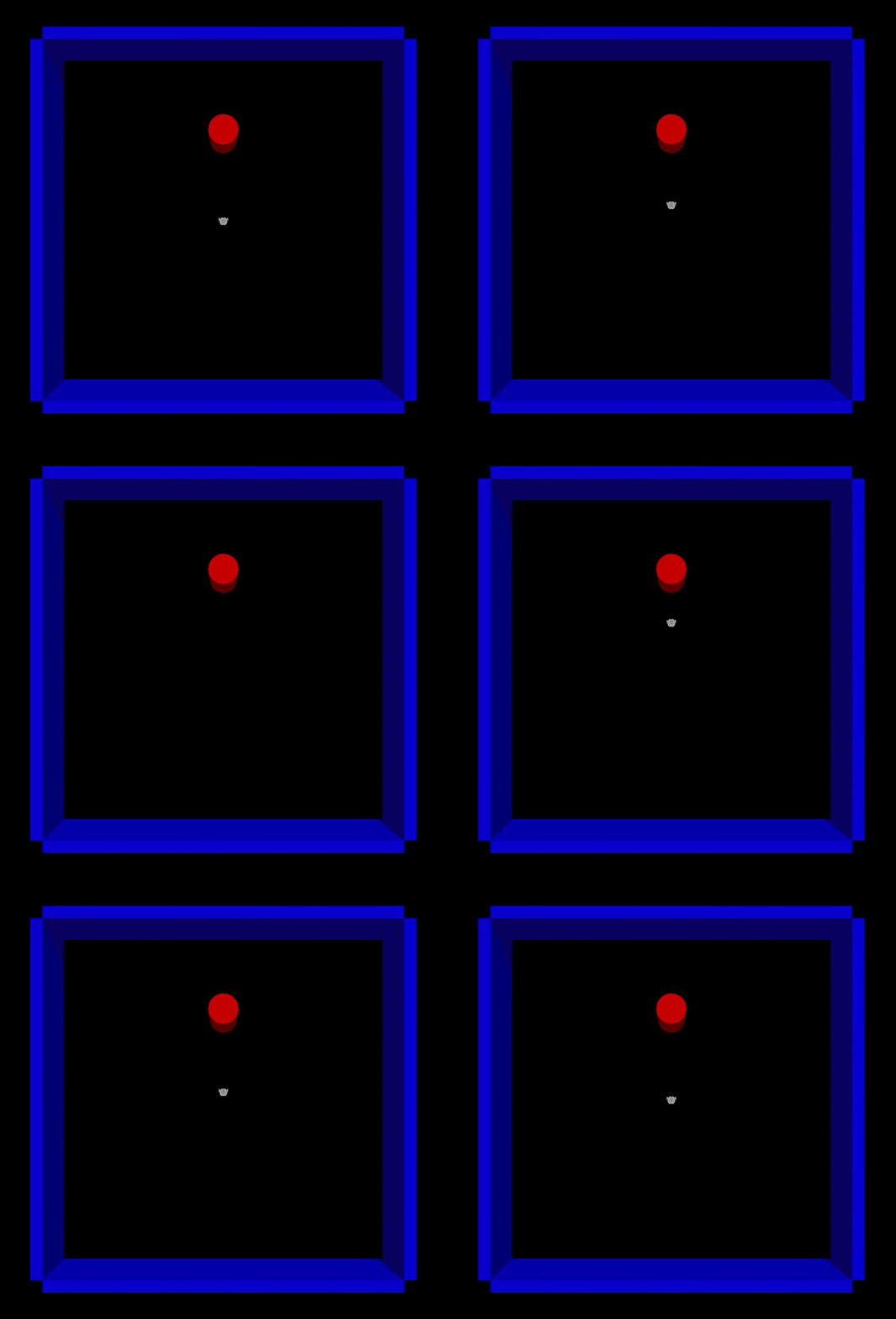
- Phase 1.1: The robot is always spawned at the origin of the world frame at the beginning of each episode, with a default orientation where roll, pitch and yaw are all zero. A goal position is always given at x = 1.5, y = 0.0 and z = 0.0 for every episode. The robot should always move to the never-changing goal position in every episode at the end of the training.
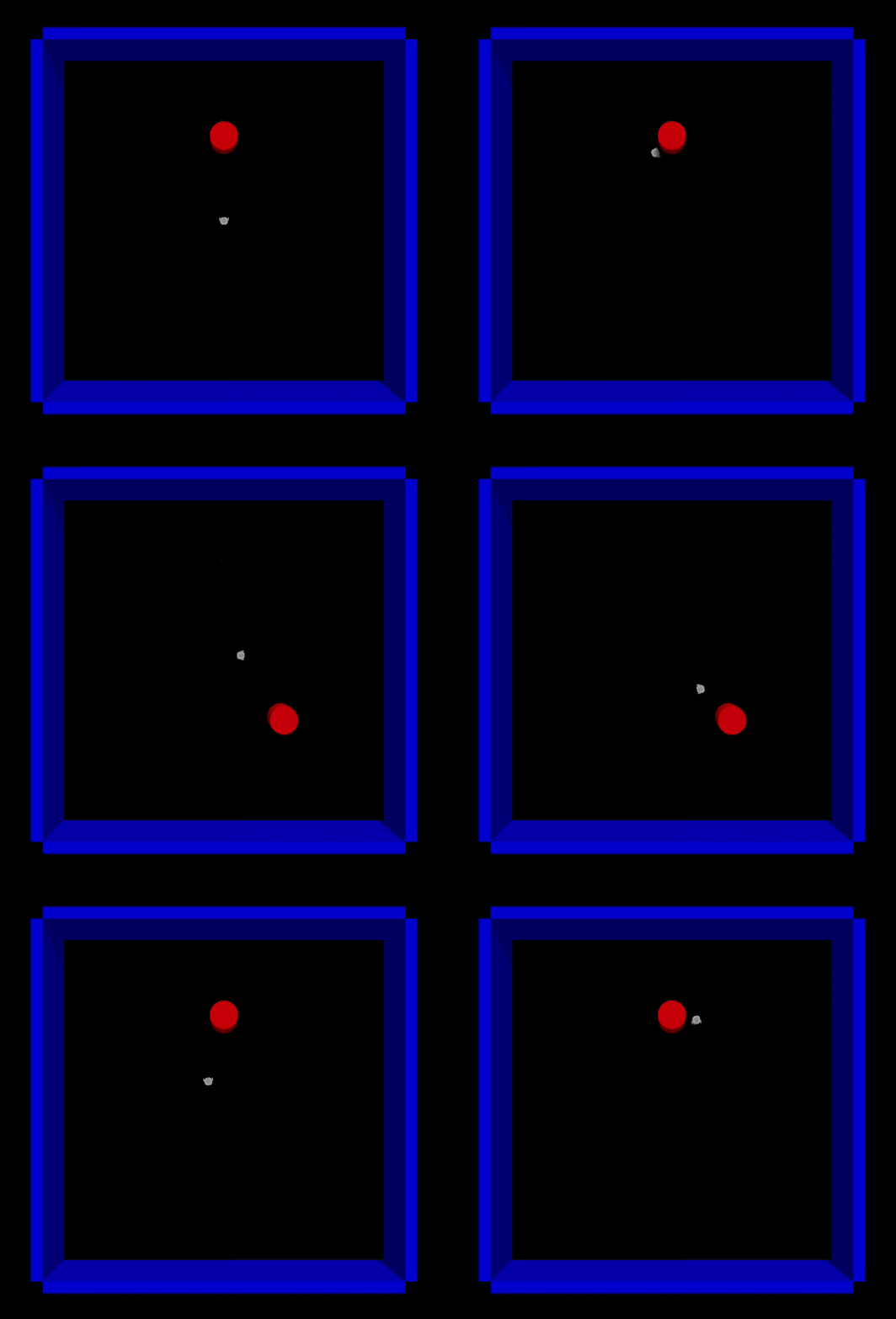
- Phase 1.2: The spawning mechanism of the robot is the same as Phase 1.1. Now there are eight potential goal positions, which are on a circle centered at the spawning spot of the robot with a radius of 1.5. Each of them shares the same possibility of being the goal position of an episode. The model is expected to learn how to control the robot according to different relative bearings.
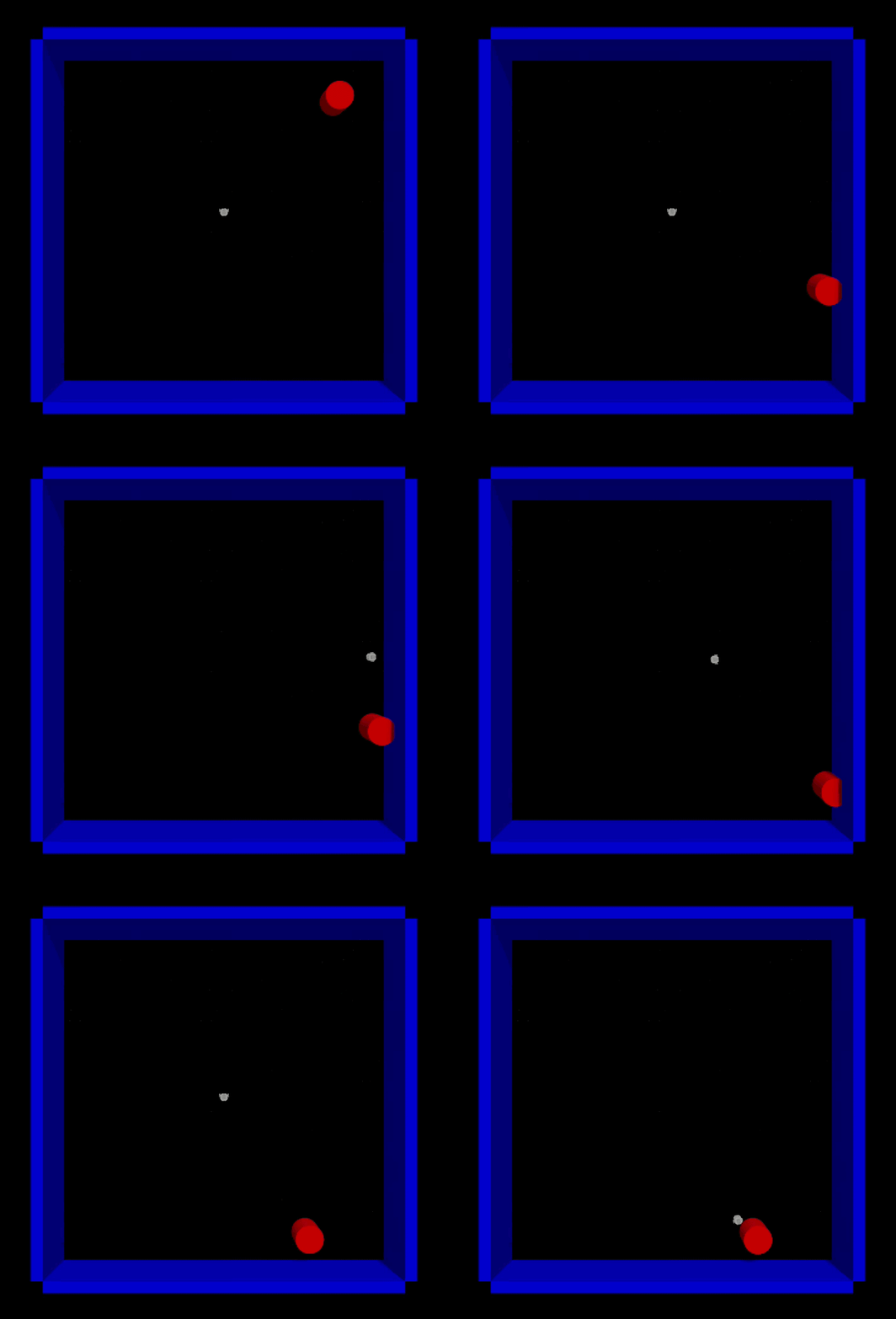
- Phase 1.3: The spawning mechanism of the robot is still the same as Phase 1.1 and Phase 1.2. But now anywhere within the walls can be the goal positon of an episode. The model is expected to learn how to control the robot with regard to both range and relative bearing.
Phase 2 Navigation and Obstacle Avoidance in a Fixed Environment
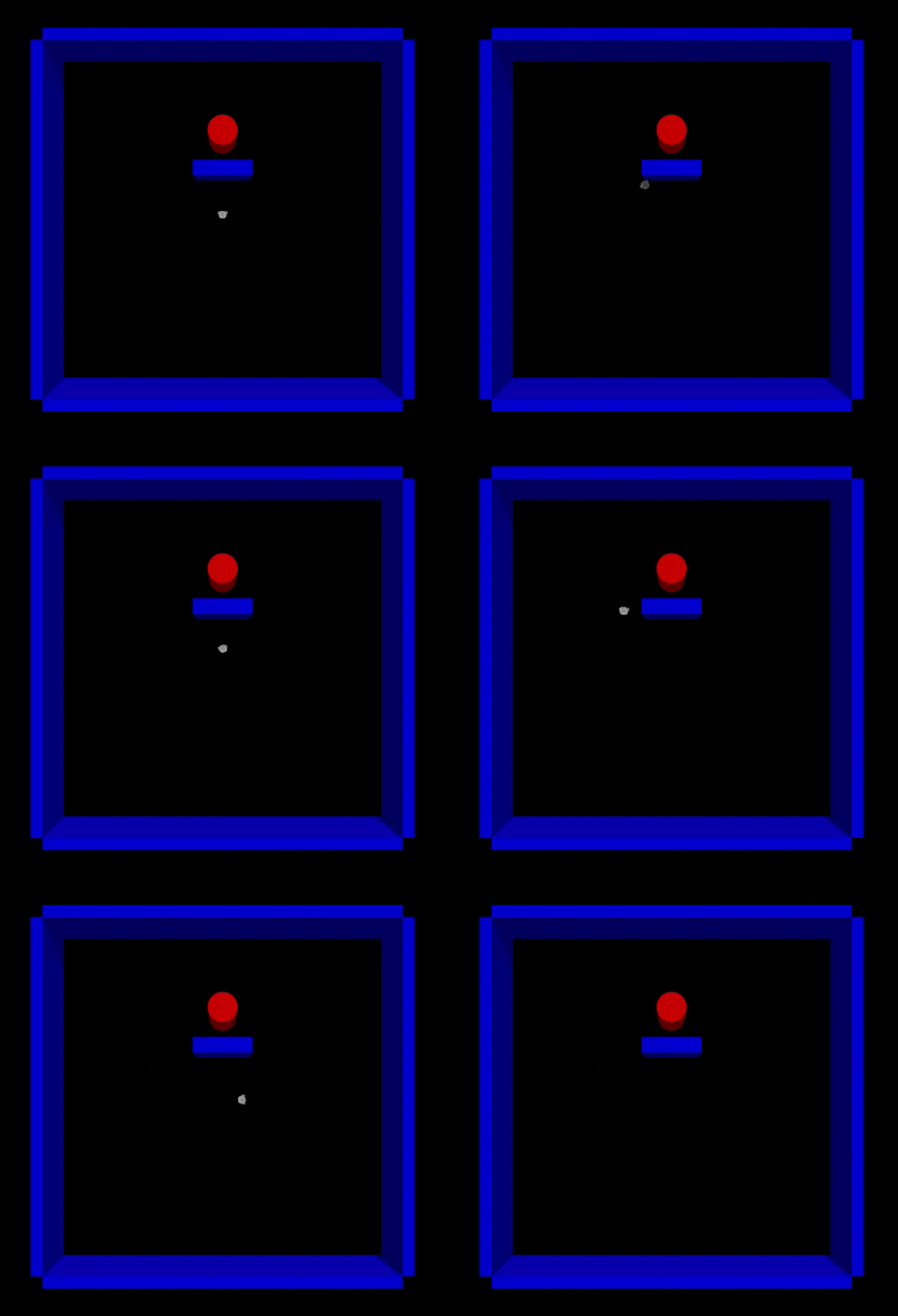
- Phase 2.1: The same setup as Phase 1.1, except the same obstalce is placed at the same spot for each episode. The robot should be able to navigate through the obstalce on its path to the goal position at the end of the training.
- Phase 2.2: The same setup as Phase 1.2, except there are eight obstalces on the map, and each of them is blocking a straight path to a goal position. The model is expected to learn how to react with many different combination of lidar reading.
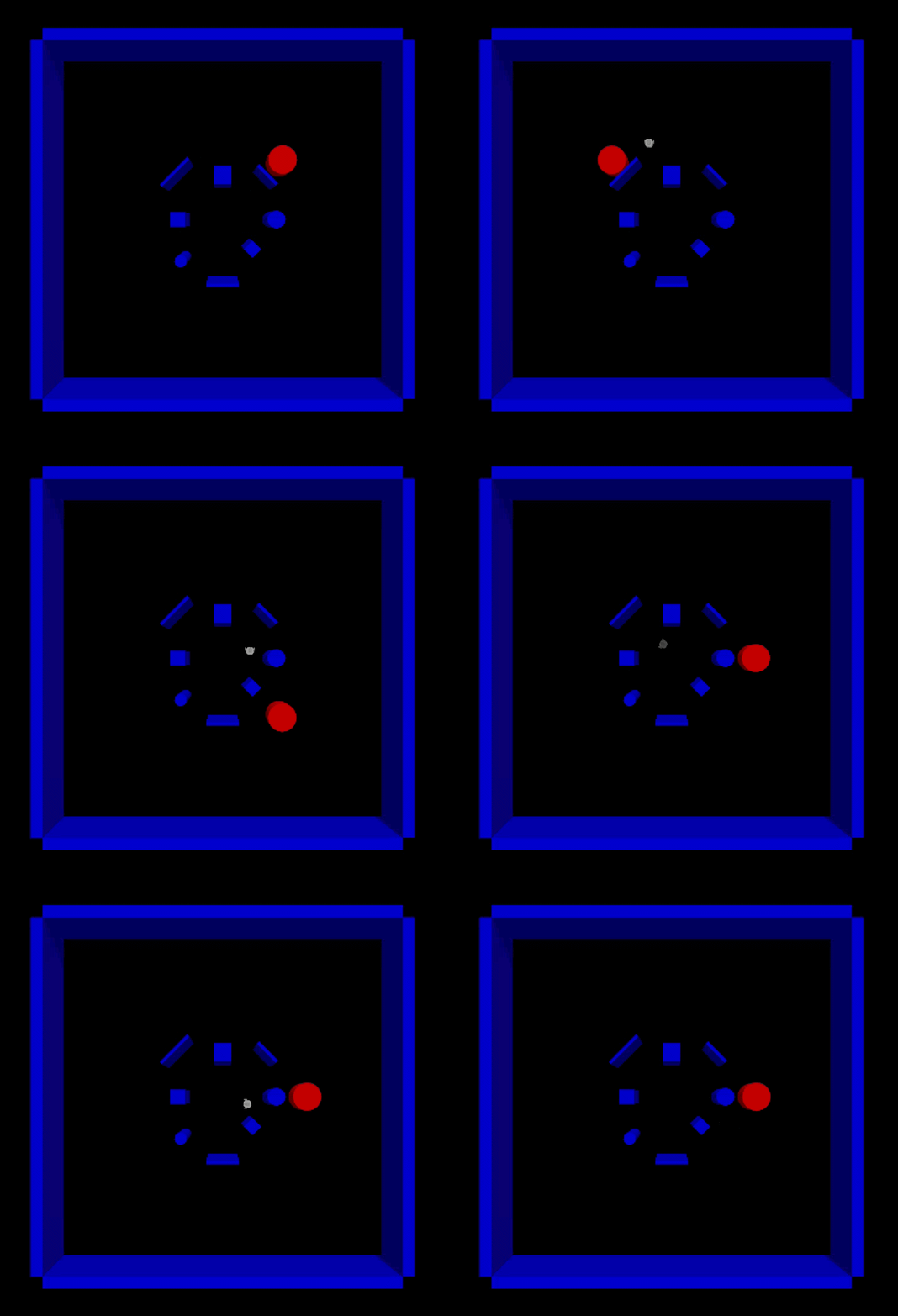
Phase 3 Navigation and Obstacle Avoidance in a Random Environment
Now a high level of randomness is added to the training process. The robot spawning, goal setting and obstacle placing are all random for each episode!
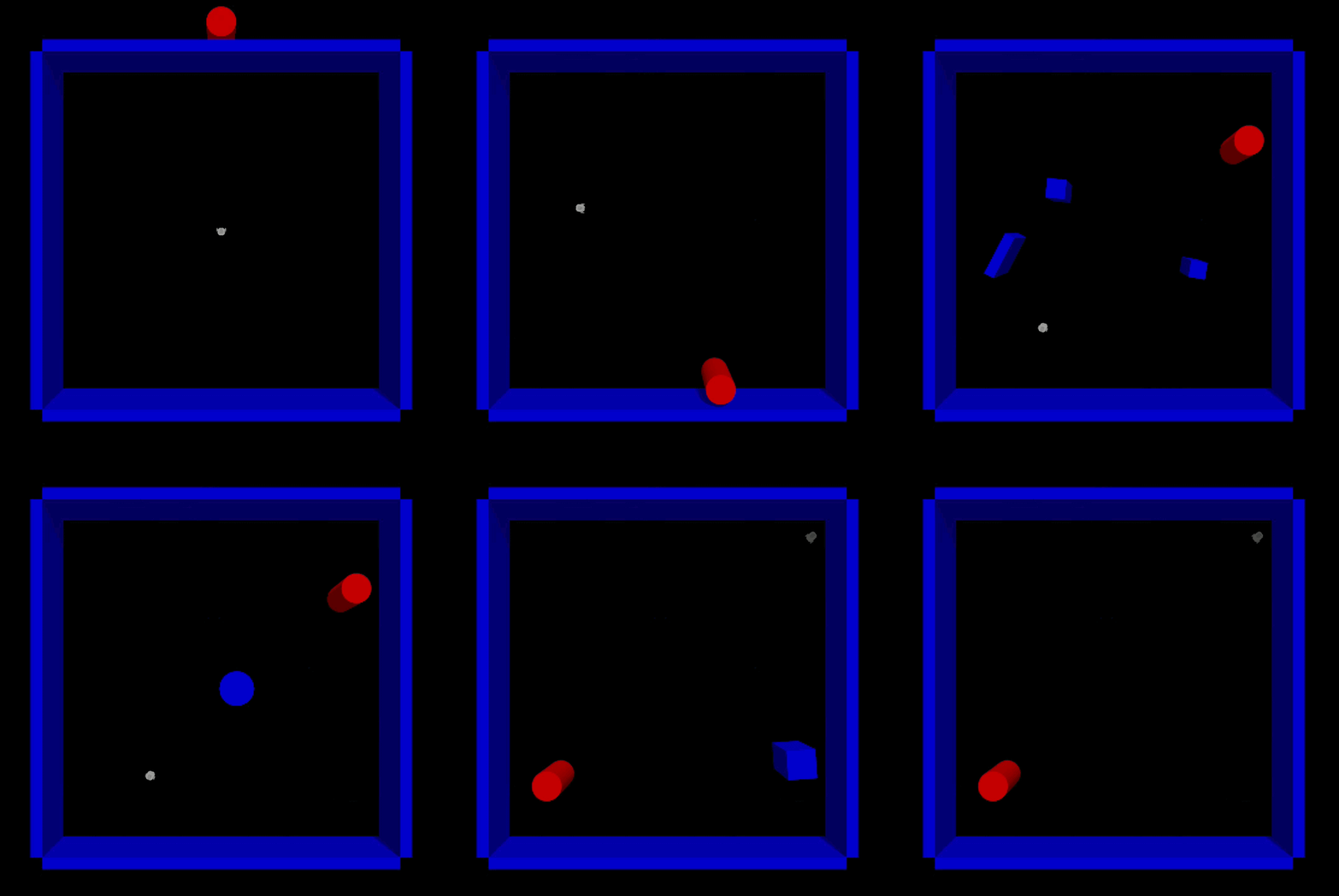
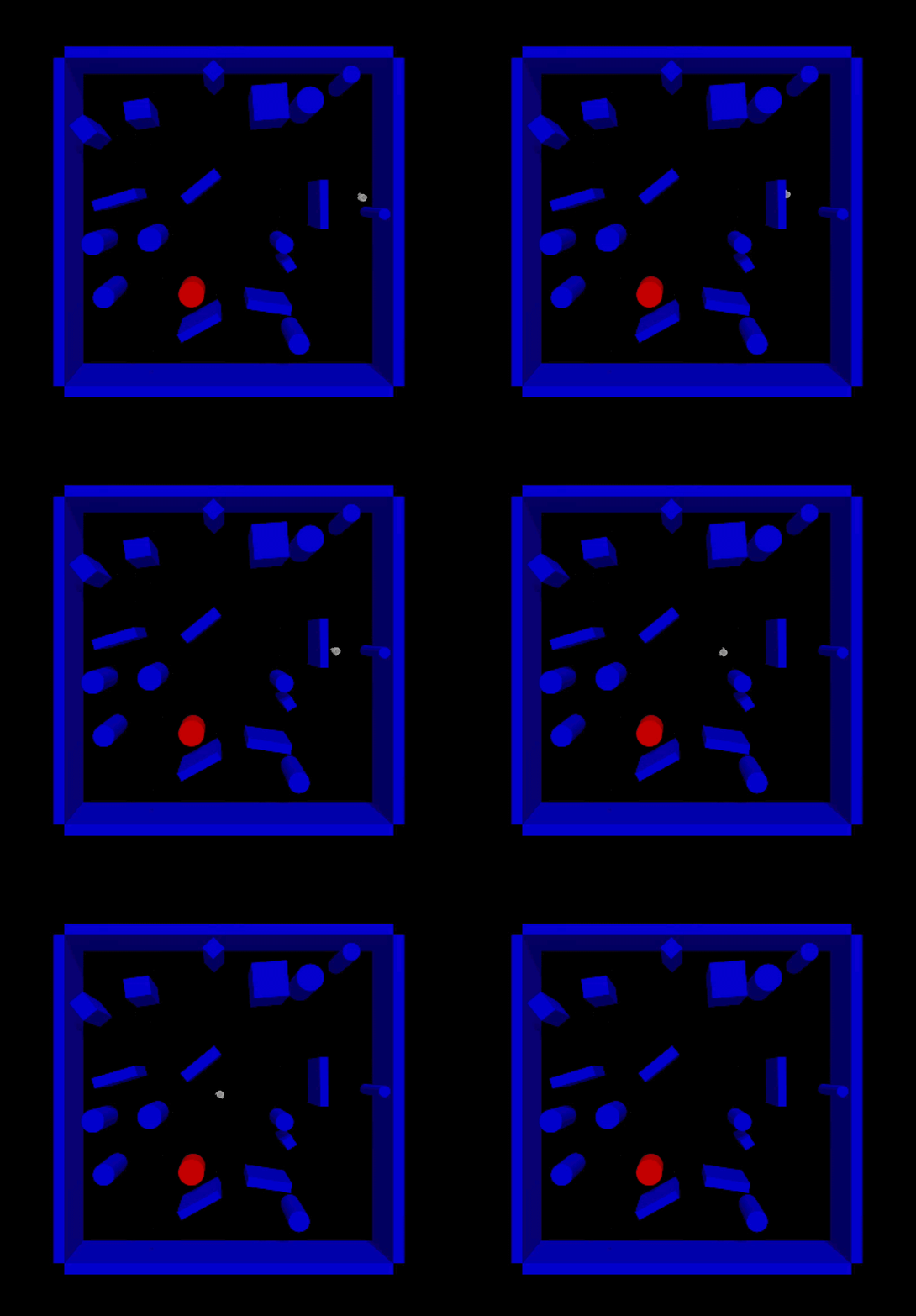
- Phase 3.1: The robot can be spawned at anythere within the walls with an random orientation. The goal position can be set at anywhere within the walls as far as it does not collide with an obstalce. The obstalces for each episode have different shapes, positions and orientations. The model is expected to so general that it can handle a wide range of environments.
Future Scope
- Implement More RL Algorithms: Due to the time constraint of the winter quarter, the development on this project by this post so far only has a span of 10 weeks. Most of the models across Phase 1 to Phase 3 were trained with PPO, some of them were also trained with A2C. Stable Baselines 3 provides optimized implementation of a great number of RL algorithms, which should definitely be tried on this topic.
- Deploy Trained Models on a Real TurtleBot3: The performance of trained models has only been verified in simulation. Model deployment on real robots is expected in the future.
- Train the Model in an Dynamic Environment: So far the training has only been conducted in many static environments, while the real world is highly dynamic. Moving objects can be added into the training environment in the future.
Citations
- Dobrevski M, Skočaj D. Deep reinforcement learning for map-less goal-driven robot navigation. International Journal of Advanced Robotic Systems. 2021;18(1). doi:10.1177/1729881421992621